The Doctoral Programme in Data Science at Loyola University provides you with the chance to analyse and gain an in-depth knowledge of the innovative methods, processes and techniques of statistical analysis, mathematical programming and artificial intelligence. Through a practical multidisciplinary approach, the programme enables you to scientifically approach and solve different complex socio-economic problems using the techniques of data science.

The purpose of the Doctoral Programme in Data Science is to train researchers to develop a research career as a data scientist, being equipped with all the necessary tools and lines of research applied to data processing.
The PhD student in this programme will acquire key knowledge for solving real problems. The mastery of tools related to artificial intelligence or the development of algorithms inspired by nature to detect or predict behaviour are some of the techniques used in this PhD programme.
In this regard, the programme offers specialised training through the acquisition of advanced methods and techniques of a different nature, to be applied to any line of research.
This PhD programme is aimed at people who wish to adapt their line of research to the new and updated techniques of data science in order to conduct top-level research.



Research teams of recognised Prestige
In person and virtual training, compatible with other activities
International mobility and collaboration agreements
Personalised academic guidance and support with a tutor
Through its doctoral programmes, Loyola University implements specific agreements with universities and research centres of interest based on the specific needs expressed by teachers, tutors and directors. Depending on the specific topics developed by the PhD students, the Academic Committee will be responsible for guiding the students towards a research stay, grant or activity that is specific and personalised for the profile of the people who are doing their dissertation in this programme.


If your past efforts are reflected in your marks, you’ll have the opportunity to obtain one of the 10 prizes we award, which can cover up to 100% of the programme cost.
Further, Loyola University has a wide range of scholarships and financial aid so that nobody who is fulfilling their academic requirements will have to stop studying for financial reasons. The scholarships and financial aid packages for studying at Loyola University are established with the university’s own funds.
Loyola University has signed agreements with financial institutions to facilitate students’ access to undergraduate, postgraduate, executive and doctoral studies.
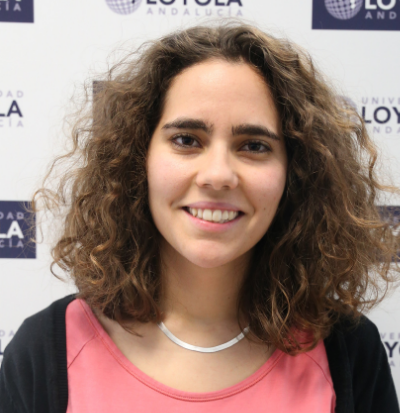
Irene Gómez Gómez. Doctoral Thesis: “Effectiveness of Lifestyle Interventions for the Prevention of Depression”
The research is based on a study aimed at collecting and analyzing the available scientific evidence on behavior change toward healthy lifestyles and assessing whether a complex behavior-change intervention is effective in preventing the incidence of depression and reducing depressive symptoms in primary care.

Carmen Martín Gómez. Doctoral Thesis: “Postpartum Depression: Effectiveness of Preventive Interventions and Evaluation in Women from the Roma Community”
The main objective of this research is to contribute to the improvement of perinatal mental health by supporting the optimization of two key pillars: the prevention of postpartum depression and its assessment, the latter focused specifically on women from the Roma community as a population at risk.

Bárbara Postigo Alonso. Doctoral Thesis: “Cognitive and Motor Neurobehavioral Relationships in People with Multiple Sclerosis and Healthy Individuals”
The study consists of developing a procedure that improves the assessment of cognitive–motor capacity loss in patients with multiple sclerosis. The work establishes the possibility that, in the future, mechanisms for early detection and tools to prevent complications in this neurodegenerative disease may be facilitated.

Alejandro Tapia Córdoba. Doctoral Thesis: “Optimization Strategies of Micro-Hydropower Systems to Supply Remote Isolated Communities”
This research consists of an optimization method that improves the efficiency of hydroelectric plants that supply energy to isolated communities in Honduras. The results of the thesis have been applied to a rural electrification project in the Central American country.
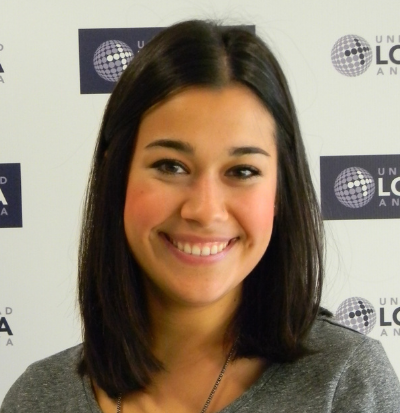
Nerea Almeda Martínez. Doctoral Thesis: “Proposal for a Mental Health Management Support Model”
The main objective of this thesis is to apply a decision-support system to improve the provision of mental health care. This makes it possible to assess the performance of mental health services and the impact of health policies.
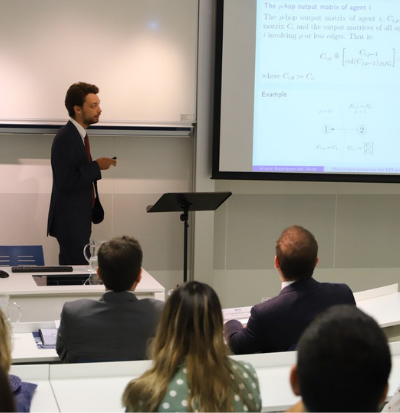
Álvaro Rodríguez del Nozal. Doctoral Thesis: “Distributed Observers for LTI Systems: An Approach Based on Subspace Decomposition”
The aim of this thesis is to provide new solutions to the problem of distributed state estimation of a Linear Time-Invariant (LTI) plant by a network of agents. To achieve this objective, several novel observer structures are presented.
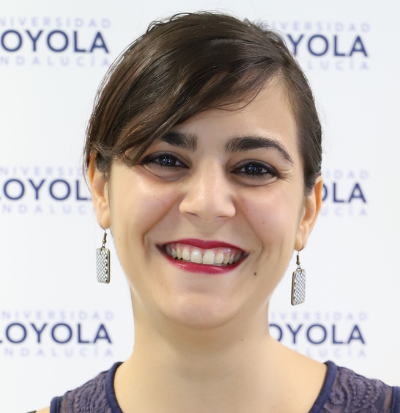
Davinia María Resurrección. Doctoral Thesis: “Cardiac Rehabilitation: Women’s Non-Adherence”
The objective of this thesis has been to study the reasons why Andalusian women have low participation and a high dropout rate from cardiac rehabilitation programs, despite such services being free in our country and cardiovascular diseases being the leading cause of death among women in Andalusia and the leading cause of mortality from non-communicable diseases worldwide.
Possibility of establishing a collaboration with the research groups at Loyola University from the time you embark upon your dissertation, as well as with companies and organisations with R&D departments. You will enjoy research stays, grants and precise and personalised activities based on the profile of the doctoral students working on their dissertations.

All doctoral programmes at Loyola University include research courses, seminars, conferences and workshops that contribute to developing their necessary academic skills.

You will have the chance to reap the benefits of the teaching and research experience of professionals with high-impact studies, R&D projects and management of PhD dissertations. Loyola Doctorates also works with an impressive list of collaborators with recognised academic prestige in each field.

At Loyola Doctorates you can present your dissertation with international mention, with joint tutoring from other institutions or universities, or you can do an industrial doctorate.

The Seville Campus is the only campus in the world that has been honoured with LEED Platinum environmental certification, thanks to its deep commitment to the comprehensive sustainability of the entire grounds. There is a free wi-fi connection on the entire campus, study rooms, a modern library, terraces for resting and relaxing, a cafeteria, landscaped areas for strolling, sports facilities.
Our Jesuit identity unifies us in a network of over 230 universities throughout the world with an unmistakable background and prestige, which endorses our social mission. Loyola University is a member of UNIJES and the International Association of Jesuit Universities (IAJU).

| Name | Doctoral Program in Data Science at Loyola University |
| Field of study | ISCED Code 1: Mathematics and statistics. ISCED Code 2: Computer science |
| Center responsible for the degree | Doctoral School (Córdoba Campus) |
|
Teaching center(s) |
Córdoba Campus, Dos Hermanas Campus (Seville) |
| Date of publication of the curriculum in the BOE (Official State Gazette) | |
| First year of implementation of the degree | 2015-2016 |
| Duration of the training program | |
| Teaching mode | Face-to-face-Virtual |
| Languages used in teaching the degree | Spanish |
| Places offered per year implemented | |
| Regulated profession | Not applicable |
Permanence Regulations
Download Permanence Regulations
Information on places for the degree
| Academic year | Number of new places offered per academic year implemented | Number of new doctoral students enrolled per academic year implemented |
| 2015/2016 | 25 | 11 |
| 2016/2017 | 25 | 14 |
| 2017/2018 | 25 | 9 |
| 2018/2019 | 25 | 11 |
| 2019/2020 | 25 | 5 |
| 2020/2021 | 25 | 6 |
| 2021/2022 | 25 | 18 |
| 2022/2023 | 25 | 14 |
| 2023/2024 | 25 | 12 |
| 2024/2025 | 25 | 19 |
| 2025/2026 | 25 | 13 |
Regulations for the transfer and recognition of academic credits

Members of the academic committee:
José Alberto Salinas Pérez (program coordinator and sponsor). Research focus on statistical and econometric models.
Mercedes Torres Jiménez (program professor and sponsor). Research focus on computational intelligence.
Pablo Ernesto Brañas Garza (program professor and sponsor). Research focus: experimental economics.
María Pilar Campoy Muñoz (program professor). Research focus: statistical and econometric models.
Francisco Martínez Estudillo (program professor). Research focus: statistical and econometric models.
Alfonso Carlos Martínez Estudillo (program professor). Research area: computational intelligence.
Horacio Molina Sánchez (program professor). Research area: experimental economics.
Ana Mª Pacheco Martínez (program professor). Research area: statistical and econometric models.
Carlos García Alonso (program professor). Research area: computational intelligence.
Responsibilities of the Program's Academic Committee.
1) Each of Loyola University's Doctoral Programs will have an Academic Committee and a Director.
2) The Academic Committee of the Doctoral Program is responsible for the academic coordination, updating, and excellence of the corresponding Doctoral Program, as well as for monitoring and supervising the activities carried out by doctoral students, tutors, and doctoral thesis directors.
a) The Academic Committee will be made up of the Director of the Doctoral Program and four doctors with recognized research prestige belonging to the lines of research associated with the program. The researchers who form the group of professors responsible for or endorsing the program will be ex officio members of the Academic Committee. The remaining members shall be appointed by the Vice-Rector for Research from among the doctoral professors of the corresponding program.
b) The director of the Doctoral Program will be one of its professors responsible for or endorsing the program. He or she will be appointed by the Rector, at the proposal of the Vice-Rector for Research. He or she will direct the Doctoral Program and convene and chair the Academic Committee of the Program.
c) The Academic Committee's functions with regard to the supervision of the Doctoral Program are:
i) To organize and coordinate the training and research activities of the Doctoral Program.
ii) To plan and evaluate the acquisition of skills by doctoral students in the Doctoral Program.
iii) To propose to the School Board new lines of research to be incorporated into the Doctoral Program, the maximum number of students to be admitted, and to define the criteria for their selection.
iv) To inform the School Board about the candidates to be admitted to the Doctoral Program.
v) Advise the EDOC on the additional training required for students who need it.
vi) Manage, monitor, control, and evaluate the mobility activities of the Doctoral Program.
vii) Advise the School Board on any additional requirements that may apply to the incorporation of new research groups and the supervision, direction, and reading of doctoral theses.
viii) Report on the incorporation and separation of professors in the Doctoral Program.
ix) Monitor doctoral graduates from the Doctoral Program.
x) Provide and manage the information necessary to maintain the accreditations of the Doctoral Program, as well as that necessary for the University's quality systems. Specifically, it is the responsibility of the Academic Committee to keep the information on the Doctoral Program up to date on the University's website.
xi) Resolve all issues relating to the Doctoral Program.
xii) Any other function that may be assigned to it by the EDOC Management.
d) The Academic Committee's functions with regard to doctoral students are as follows:
i) To monitor, control, and evaluate the Activity Documents of doctoral students, their Research Plans, and their annual Monitoring Reports.
ii) To assign the tutor and director of the students' Doctoral Thesis.
iii) To approve the students' first doctoral thesis project.
iv) To authorize part-time doctoral studies, as well as to authorize changes in study mode.
v) To evaluate co-supervision proposals and report to the School Board.
vi) To ensure that theses submitted for reading meet the minimum requirements.
vii) Authorize requests for international recognition.
viii) Propose to the School Board the members of the committee that will evaluate a doctoral thesis, determining the permanent and alternate members.
3) The Academic Committee of a Doctoral Program may be dissolved by the Rector.
| Year 2015/16 | Year 2016/17 | Year 2017/18 | Year 2018/19 | Year 2019/20 | Year 2020/21 | Year 2021/22 | Year 2022/23 | Year 2023/24 | Year 2024/25 | Year 2025/26 |
| 03/11/15 | 10/10/16 | 06/10/17 | 22/10/18 | 01/10/19 | 09/09/20 | 26/10/21 | 08/09/22 | 06/09/23 | 12/09/24 | 10/10/25 |
| 04/03/16 | 15/11/16 | 22/11/17 | 09/01/19 | 18/12/19 | 19/10/20 | 24/11/21 | 25/10/22 | 25/09/23 | 19/09/24 | 17/10/25 |
| 10/03/16 | 24/11/16 | 01/02/18 | 05/02/19 | 17/02/20 | 18/11/20 | 20/12/21 | 24/11/22 | 27/09/23 | 03/10/24 | 28/10/25 |
| 19/07/16 | 07/12/16 | 25/04/18 | 14/03/19 | 03/04/20 | 28/01/21 | 22/02/22 | 09/12/22 | 06/10/23 | 23/10/24 | 10/11/25 |
| 02/03/17 | 01/06/18 | 29/04/19 | 25/06/20 | 26/03/21 | 21/04/22 | 09/01/23 | 16/10/23 | 06/11/24 | 19/11/25 | |
| 06/04/17 | 25/06/18 | 20/05/19 | 21/07/20 | 06/05/21 | 24/05/22 | 24/01/23 | 25/10/23 | 19/11/24 | 27/11/25 | |
| 18/05/17 | 18/07/18 | 24/06/19 | 31/05/21 | 15/06/22 | 06/02/23 | 26/10/23 | 21/11/24 | 04/12/25 | ||
| 12/07/17 | 24/09/18 | 19/07/19 | 10/06/21 | 08/07/22 | 14/02/23 | 30/10/23 | 29/11/24 | 15/12/25 | ||
| 13/07/21 | 15/07/22 | 21/02/23 | 24/11/23 | 17/12/24 | 17/12/25 | |||||
| 21/09/21 | 28/03/23 | 11/12/23 | 17/12/24 | 26/01/25 | ||||||
| 18/04/23 | 18/12/23 | 13/01/24 | 10/02/25 | |||||||
| 19/05/23 | 25/01/24 | 21/01/25 | 02/03/25 | |||||||
| 29/05/23 | 09/02/24 | 30/01/25 | ||||||||
| 21/06/23 | 21/02/24 | 12/02/25 | ||||||||
| 03/07/23 | 18/03/24 | 24/02/25 | ||||||||
| 07/07/23 | 24/04/24 | 03/03/25 | ||||||||
| 07/05/24 | 10/03/25 | |||||||||
| 20/05/24 | 31/03/25 | |||||||||
| 27/05/24 | 28/04/25 | |||||||||
| 06/06/24 | 30/04/25 | |||||||||
| 19/06/24 | 14/05/25 | |||||||||
| 04/07/24 | 15/05/25 | |||||||||
| 10/07/24 | 21/05/25 | |||||||||
| 18/07/24 | 28/05/25 | |||||||||
| 23/07/24 | 23/06/25 | |||||||||
| 17/07/25 | ||||||||||
| 30/09/25 |
| May | Between 10th and 14th |
| June |
Between 8th and 10th |
| July | Between 6th and 9th |
| September | Between 7th and 9th |
| October | Between 13th and 15th |
The knowledge required for admission to the Doctoral Programme in Data Science at Loyola University matches one of the following three profiles:
A bachelor's degree in social sciences; economics and business administration; engineering; mathematics; statistics and related sciences, and a postgraduate degree in one of the areas of knowledge related to the above bachelor's degrees awarded by an official master's programme in the European Union with a research or mixed focus in which the candidate has completed the research pathway and a master's degree thesis of 16 ECTS credits or more.
A bachelor’s degree in social sciences; economics and business administration; engineering; mathematics; statistics and related sciences, and a postgraduate degree in one of the areas of knowledge related to the above bachelor’s degrees awarded by an official master's programme in the European Union, with a professional or mixed focus in which the candidate has completed the professional pathway. Those who fit this second admission profile will have the opportunity to access the Doctoral Programme by taking the pertinent complementary training.
A bachelor’s degree in economics, business administration and management, engineering, sociology, mathematics, statistics, communication or law, and a postgraduate degree unrelated to a field of knowledge in the field of economics, business administration and management, engineering, sociology, mathematics or statistics awarded by an official master programme in the European Union, irrespective of the orientation of the programme. Those who fit this third admission profile will have the opportunity to access the Doctoral Programme by taking the pertinent further training courses.
Required languages and levels
In addition to the above, in order to be admitted to the programme, the candidate must accredit, through the qualifications accepted by Loyola University, a B1 level of English and Spanish (if it is not their mother tongue). If you are unable to do so, you will take an online placement test prepared by the Loyola School of Language, Culture and Communication during the admission process.
It is important to stress that, in order to be able to start the process to deposit the doctoral thesis, the PhD student must accredit a B2 level of English and a B1 level of Spanish, if applicable.
| Profiles | Additional Training | |||||||||||
| Profile 1 | Not required | |||||||||||
| Profile 2 | 16 ECTS | |||||||||||
| Profile 3 | 20 ECTS |
Candidates applying for admission to the programme with profiles 2 and 3 will be admitted subject to the completion of a series of complementary training courses. These will be decided upon by the Academic Committee for the programme and may be: