The Doctoral Programme in Psychology at Loyola University provides an in-depth presentation of the methods, processes and procedures of statistical analysis in the field of psychology with the objective of training researchers in this field of knowledge, as well as stimulating the generation and development of applied knowledge that can be transferred to society in its different expressions.

The Doctoral Programme in Psychology aims to train researchers to develop a research career in the area of psychology, having complete knowledge of all the necessary tools and lines of research applied to the field of clinical psychology and neurosciences.
The doctoral student in this programme will acquire key knowledge in this área This programme provides the opportunity to develop neuroscientific research in psychology by promoting the use of advanced techniques for the study of human cognition, behaviour and emotions.
This programme also enables research into psychological processes related to the promotion, improvement and maintenance of health and those aspects that improve well-being and quality of life. The programme will have a Human Neuroscience Laboratory available for students in the programme, as well as the Gessel Chamber for observational and clinical studies, and the Psychological, Educational and Social Assistance Service for the University Community (SAPES).
This doctoral programme is for people who wish to adapt their line of research to the methods, processes and procedures of statistical analysis in the field of psychology in order to transfer this knowledge to society



Research teams of recognised Prestige
In person and virtual training, compatible with other activities
International mobility and collaboration agreements
Personalised academic guidance and support with a tutor
Through its doctoral programmes, Loyola University develops specific agreements with universities and research centres of interest based on the specific needs expressed by teachers, tutors and directors. Depending on the specific topics developed by the PhD students, the Academic Committee will be responsible for guiding the students towards a research stay, grant or activity that is specific and personalised for the profile of the people who are doing their thesis in this programme.


If your past efforts are reflected in your marks, you’ll have the opportunity to obtain one of the 10 prizes we award, which can cover up to 100% of the programme cost.
Further, Loyola University has a wide range of scholarships and financial aid so that nobody who is fulfilling their academic requirements will have to stop studying for financial reasons. The scholarships and financial aid packages for studying at Loyola University are established with the university’s own funds.
Loyola University has signed agreements with financial institutions to facilitate students’ access to undergraduate, postgraduate, executive and doctoral studies.

Juan Luesia. PhD Candidate
“Development of an Academic Competency Assessment Protocol Based on Mixed Methods”
The main objective of the thesis is to evaluate the usefulness of academic competency assessment protocols applied in the university context and to propose a protocol that optimizes the identification of the needs of the students assessed.
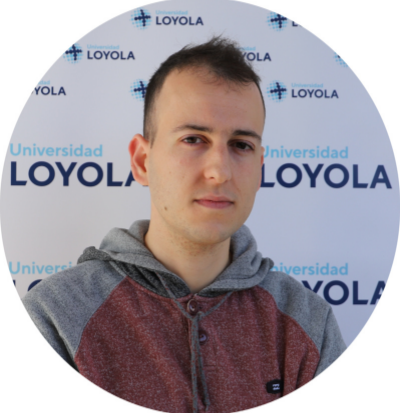
Sergio Navas León. PhD Candidate (FPU fellowship)
“Modification of Body Perception through Auditory Feedback and Wearable Technology: Promoting Physical and Emotional Health in People with Eating Disorders”
The research is based on a study aimed at developing new assessment and treatment tools for people with eating disorders or at risk of developing them.

Ariana García Nevares. PhD
“Impact of Cognitive Deficits in Planning and Attentional–Inhibitory Control on the Ability to Perform Activities of Daily Living in Parkinson’s Disease”
This research seeks to understand how planning and attentional deficits affect performance in Instrumental Activities of Daily Living.
Possibility of establishing a collaboration with the research groups at Loyola University from the time you embark upon your dissertation, as well as with companies and organisations with R&D departments. You will enjoy research stays, grants and precise and personalised activities based on the profile of the doctoral students working on their dissertations.

All doctoral programmes at Loyola University include research courses, seminars, conferences and workshops that contribute to developing their necessary academic skills.

You will have the chance to reap the benefits of the teaching and research experience of professionals with high-impact studies, R&D projects and management of PhD dissertations. Loyola Doctorates also works with an impressive list of collaborators with recognised academic prestige in each field.

At Loyola Doctorates you can present your dissertation with international mention, with joint tutoring from other institutions or universities, or you can do an industrial doctorate.

The Seville Campus is the only campus in the world that has been honoured with LEED Platinum environmental certification, thanks to its deep commitment to the comprehensive sustainability of the entire grounds. There is a free wi-fi connection on the entire campus, study rooms, a modern library, terraces for resting and relaxing, a cafeteria, landscaped areas for strolling, sports facilities.
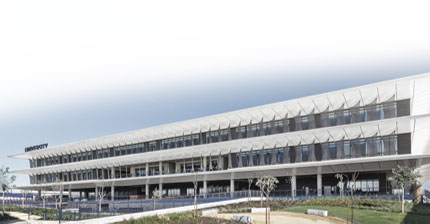
Our Jesuit identity unifies us in a network of over 230 universities throughout the world with an unmistakable background and prestige, which endorses our social mission. Loyola University is a member of UNIJES and the International Association of Jesuit Universities (IAJU).

| Name | Doctoral Program in Psychology |
| Field of study | ISCED Code 1: Social and Behavioral Sciences. ISCED Code 2: Health |
| Center responsible for the degree | Doctoral School (Seville Campus) |
|
Teaching center(s) |
Córdoba Campus, Dos Hermanas Campus (Seville) |
| Date of publication of the curriculum in the BOE (Official State Gazette) | |
| First year of implementation of the degree | 2019-2020 |
| Duration of the training program | |
| Teaching mode | Face-to-face-Virtual |
| Languages used in teaching the degree | Spanish |
| Places offered per year implemented | 20 |
| Regulated profession |
Permanence Regulations
Download Permanence Regulations
Information on places for the degree
| Academic year | Number of new places offered per academic year implemented | Number of new doctoral students enrolled per academic year implemented |
| 2019/2020 | 10 | 4 |
| 2020/2021 | 10 | 4 |
| 2021/2022 | 20 | 8 |
| 2022/2023 | 20 | 24 |
Members of the academic committee:
Laura Esteban García (Psychology Program Coordinator)
Paula Herrero Diz, line sponsor
Joaquín Ibañez Alfonso, line sponsor.
Alejandro Galvao, PD professor
Teresa Torrecillas Lacave, PD professor
Davinia Resureción, PD professor
Responsibilities of the Program's Academic Committee.
1) Each of Loyola University's Doctoral Programs will have an Academic Committee and a Director.
2) The Academic Committee of the Doctoral Program is responsible for the academic coordination, updating, and excellence of the corresponding Doctoral Program, as well as for monitoring and supervising the activities carried out by doctoral students, tutors, and doctoral thesis directors.
a) The Academic Committee will be made up of the Director of the Doctoral Program and four doctors with recognized research prestige belonging to the lines of research associated with the program. The researchers who form the group of professors responsible for or endorsing the program will be ex officio members of the Academic Committee. The remaining members shall be appointed by the Vice-Rector for Research from among the doctoral professors of the corresponding program.
b) The director of the Doctoral Program will be one of its professors responsible for or endorsing the program. He or she will be appointed by the Rector, at the proposal of the Vice-Rector for Research. He or she will direct the Doctoral Program and convene and chair the Academic Committee of the Program.
c) The Academic Committee's functions with regard to the supervision of the Doctoral Program are:
i) To organize and coordinate the training and research activities of the Doctoral Program.
ii) To plan and evaluate the acquisition of skills by doctoral students in the Doctoral Program.
iii) To propose to the School Board new lines of research to be incorporated into the Doctoral Program, the maximum number of students to be admitted, and to define the criteria for their selection.
iv) To inform the School Board about the candidates to be admitted to the Doctoral Program.
v) Advise the EDOC on the additional training required for students who need it.
vi) Manage, monitor, control, and evaluate the mobility activities of the Doctoral Program.
vii) Advise the School Board on any additional requirements that may apply to the incorporation of new research groups and the supervision, direction, and reading of doctoral theses.
viii) Report on the incorporation and separation of professors in the Doctoral Program.
ix) Monitor doctoral graduates from the Doctoral Program.
x) Provide and manage the information necessary to maintain the accreditations of the Doctoral Program, as well as that necessary for the University's quality systems. Specifically, it is the responsibility of the Academic Committee to keep the information on the Doctoral Program up to date on the University's website.
xi) Resolve all issues relating to the Doctoral Program.
xii) Any other function that may be assigned to it by the EDOC Management.
d) The Academic Committee's functions with regard to doctoral students are as follows:
i) To monitor, control, and evaluate the Activity Documents of doctoral students, their Research Plans, and their annual Monitoring Reports.
ii) To assign the tutor and director of the students' Doctoral Thesis.
iii) To approve the students' first doctoral thesis project.
iv) To authorize part-time doctoral studies, as well as to authorize changes in study mode.
v) To evaluate co-supervision proposals and report to the School Board.
vi) To ensure that theses submitted for reading meet the minimum requirements.
vii) Authorize requests for international recognition.
viii) Propose to the School Board the members of the committee that will evaluate a doctoral thesis, determining the permanent and alternate members.
3) The Academic Committee of a Doctoral Program may be dissolved by the Rector.
| Year 2019/20 | Year 2020/21 | Year 2021/22 | Year 2022/23 | Year 2023/24 | Year 2024/25 | Year 2025/26 |
| 12/06/19 | 15/09/20 | 21/09/21 | 08/09/22 | 08/09/23 | 09/09/24 | 19/09/25 |
| 23/07/19 | 20/10/20 | 04/11/21 | 13/09/22 | 19/09/23 | 16/09/24 | 10/10/25 |
| 04/12/19 | 03/02/21 | 18/11/21 | 10/10/22 | 28/09/23 | 03/10/24 | 17/11/25 |
| 19/02/20 | 15/03/21 | 03/12/21 | 24/10/22 | 05/10/23 | 04/11/24 | 10/02/26 |
| 12/03/20 | 17/05/21 | 14/12/21 | 28/10/22 | 15/10/23 | 22/11/24 | |
| 24/04/20 | 14/06/21 | 17/01/22 | 04/11/22 | 25/10/23 | 11/12/24 | |
| 14/05/20 | 09/07/21 | 21/02/22 | 07/11/22 | 29/11/23 | 15/01/25 | |
| 12/06/20 | 07/03/22 | 14/11/22 | 11/12/23 | 12/02/25 | ||
| 26/06/20 | 14/03/22 | 13/12/22 | 18/12/23 | 21/03/25 | ||
| 14/07/20 | 19/04/22 | 31/01/23 | 22/01/24 | 04/04/25 | ||
| 24/05/22 | 21/02/23 | 20/02/24 | 25/04/25 | |||
| 13/06/22 | 30/03/23 | 14/03/24 | 02/05/25 | |||
| 04/07/22 | 21/04/23 | 20/05/24 | 21/05/25 | |||
| 12/07/22 | 22/05/23 | 28/05/024 | 29/05/25 | |||
| 25/07/22 | 12/06/23 | 19/06/24 | 30/06/25 | |||
| 03/07/23 | 15/07/24 | 10/07/25 | ||||
| 13/07/23 |
| May | Between 10th and 14th |
| June | Between 8th and 10th |
| July | Between 6th and 9th |
| September | Between 7th and 9th |
*These dates may be subject to change if decided by the Academic Committee.
The knowledge required for admission to the Psychology Programme at Loyola University meets one of these three profiles:
Profile 1
The knowledge required for admission to the Doctoral Programme in Psychology at Loyola University is:
1. A bachelor's degree in psychology or any other qualification that the Doctoral Committee considers to be compatible with this programme.
2. A postgraduate degree in one of the areas of knowledge related to the degree in psychology, or any other that, in the opinion of the Academic Committee of the Doctoral Programme, is compatible with it, awarded by a master's programme in the European Union with a research or mixed orientation in which the candidate has completed a master's thesis of 6 ECTS credits or more, in which the candidate completed the research pathway.
Languages required and level
Spanish. Minimum level: B2
English. Minimum level: B2
All persons who cannot accredit their language level by means of the corresponding certificate will have to take an English language test.
The training activities of the doctoral programme are designed not only to increase the knowledge, skills and competence level of doctoral students, but also play an important role in compensating for any possible shortcomings.
Profile 2
The knowledge required for admission to the Doctoral Programme in Psychology at Loyola University is:
1. A bachelor's degree in psychology or any other degree that the Academic Committee of the Doctoral Programme considers to be compatible with the programme.
2. A postgraduate degree in one of the areas of knowledge related to the bachelor’s degree in psychology, or any other which, in the opinion of the Academic Committee of the Doctoral Programme, is compatible with it, awarded by a master's programme in the European Union with a professional or mixed orientation in which the candidate has completed a master's thesis for 6 ECTS credits or more in which the candidate completed their professional pathway.
Languages required and level
Spanish. Minimum level: B2
English. Minimum level: B2
All persons who cannot accredit their language level by means of the corresponding certificate will have to take an English language test.
The training activities of the doctoral programme are designed not only to increase the knowledge, skills and competence level of doctoral students, but also play an important role in compensating for any possible shortcomings.
Profile 3
The knowledge required for admission to the Doctoral Programme in Psychology at Loyola University is:
1. A bachelor's degree in psychology or any other degree in psychology-related fields.
2. A postgraduate degree in psychology-related fields, awarded by a master's programme in the European Union in which the candidate completed a master's thesis for 6 ECTS credits.
Languages required and level
Spanish. Minimum level: B2
English. Minimum level: B2
All persons who cannot accredit their language level by means of the corresponding certificate will have to take an English language test.
The training activities of the doctoral programme are designed not only to increase the knowledge, skills and competence level of doctoral students, but also play an important role in compensating for any possible shortcomings.
Required languages and levels
In addition to the above, a Spanish level of C1 (if it is not your mother tongue) and an English level of B2 will be required.
The services of the Loyola School of Language, Culture and Communication are available to all persons who do not hold the pertinent certificate to accredit their language level. By using this service, they will be able to accredit their language level using its online assessment system.
| Perfiles | Complementos de Formación | |||||||
| Profile 1 | Not required | |||||||
| Profile 2 | 12 ECTS | |||||||
| Profile 3 | 20 ECTS |
Those students who do not meet the conditions for direct admission to the Doctoral Programme will be required to take some complementary training, which may be:
|
Indicador/Curso Académico |
2023/24 |
2024/25 |
|
Number of places offered |
20 |
20 |
|
Number of newly enrolled doctoral candidates |
12 |
7 |
|
Total number of enrolled doctoral candidates |
35 |
31 |
|
Percentage of international students enrolled with respect to the total |
14,29% |
16,13% |
|
Part-time enrolment rate |
45,72% |
61,29% |
|
Percentage of students enrolled in the Clinical and Health Psychology track |
34,28% |
37,50% (12) |
|
Percentage of students enrolled in the Cognitive and Affective Neuroscience track |
45,71% |
34,37% (11) |
|
Percentage of students enrolled in the Psychology, Communication and Digital Society research track |
20,01% |
22,58% (7) |
|
Number of academic staff in the Programme |
25 |
28 |
|
Number of ongoing competitive research projects |
12 |
|
|
Number of doctoral theses defended |
2 |
1 |
|
Rate of full-time doctoral theses defended |
100% |
100% |
|
Rate of part-time doctoral theses defended |
0,00% |
0,00% |
|
Percentage of programme members supervising doctoral theses |
72% |
|
|
Percentage of theses awarded cum laude |
100% |
|
|
Percentage of theses with international mention |
100% |
100% |
|
Number of relevant scientific contributions derived from defended doctoral theses |
12 |
3 |
|
Average duration of the full-time doctoral programme |
* |
* |
|
Average duration of the part-time doctoral programme |
* |
* |
|
Thesis completion rate |
73,74% |
82,53% |
|
Dropout rate |
** |
*(bis) |
|
Results of doctoral candidates’ satisfaction with the training received |
4,19 |
4,20 |
|
Results of doctoral candidates’ satisfaction with the Programme |
4,38 |
4,60 |
|
Doctoral candidates’ satisfaction with mobility programmes |
4,20 |
4,60 |
|
Doctoral candidates’ satisfaction with supervisory functions |
4,63 |
4,44 |
|
Doctoral candidates’ satisfaction with tutoring functions |
4,50 |
4,70 |
|
Overall satisfaction results of academic staff/researchers with the PhD Programme |
4,62 |
4,83 |
|
Overall satisfaction results of Administrative and Services Staff (PAS) with the PhD Programme |
4,45 |
4,09 |
|
Results of graduate satisfaction*** |
- |
- |
|
Results of employer satisfaction*** |
- |
- |
* Data not yet available. Description::
*(bis): Data not estimable, as it is necessary to compute the complete information for the 2025/26 academic year.
**Percentage ratio between the students of an entry cohort C enrolled in Degree Programme T at University U in academic year X who did not re-enrol in the same Degree Programme T in academic years X+1 and X+2, and the total number of students in that entry cohort C who accessed Degree Programme T in academic year X
*** No result available due to the minimum number of responses required to obtain a valid result not having been reached.